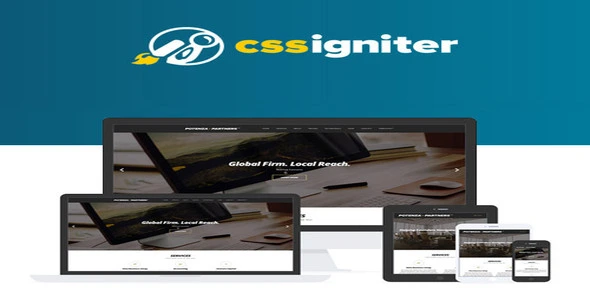
CSS Igniter Potenza WordPress Theme
100% Original fileUnmodified copy of the developer's release
DeveloperThemeForest
Up to dateOriginal released Sep 17, 2025 · File last updated Nov 20, 2026
About this product
Potenza Theme 1.2.4 is a one-page business theme for WordPress, made for businesses of any size that want one long landing page, with the menu scrolling to its sections, instead of a site of many pages. You can build the page in the block editor or in Elementor, and add a WooCommerce shop if you sell products. The theme runs on the developer's free framework plugin, which you install alongside it. The developer provides sample content you can import from the theme's onboarding page, including a version for Elementor.
How to install Potenza Theme
- This theme needs the developer's free framework plugin. Install and activate it under Plugins, Add New Plugin, or follow the prompt on the theme's onboarding page later; the order does not matter.
- Check your hosting against the developer's docs: PHP 7.4 or higher, MySQL 5.6 or higher or MariaDB 10.1 or higher, and HTTPS support.
- Log in to GPLGuide, open this product and click Download under Your downloads.
- In your WordPress dashboard go to Appearance, Themes, Add New Theme, click Upload Theme and choose the theme ZIP.
- Click Install Now, then Activate. WordPress opens the theme's onboarding page, which asks you to install the framework plugin if it is still missing.
- For the demo, open Appearance, Theme Options, Sample Content and install and activate each plugin listed there (the sample content also asks for an SVG support plugin). Click Get Started, pick the builder or variation, then click Import Demo.
- Some imported links may still point to the demo site, so check them. Layout, colors and fonts sit under Appearance, Customize, Site Options. Menu links that scroll to sections need the Anchor Block plugin.
Features & capabilities
- A one-page layout where menu links scroll to sections you mark with anchors.
- Header layout choices with a transparent mode, plus a main logo and an alternative logo.
- A top bar you can switch on, with three content areas, and footer credits you can remove in the Customizer.
- Global Sections: reusable content that can sit in more than 15 theme locations, including header, footer and sidebar.
- Custom color schemes for the whole site or single sections, and Google Fonts pairings that you can switch off.
- Pages built with blocks from the developer's free block collection, or with Elementor.
- Six page templates that set sidebar position and content width, and page settings to remove content padding or hide title elements.
- A button style for any menu item by giving it the nav-button class.
- Store options under Customize, WooCommerce for the product catalog and single products, with two mobile shop columns by default.
Frequently asked questions
Is this the original file?
Yes. Every product on GPLGuide is the developer’s own release, unchanged. The license key comes already activated. If a product does ask for a key, the activation steps appear on its page once you have it.
Is it legal to use a GPL plugin or theme from GPLGuide?
Yes. WordPress plugins and themes are released under the GPL, which lets anyone use, share and change the code. The developer’s support desk and the developer’s own update service are not part of the file; those stay with the developer.
How do I install it?
Log in, open the product page and click Download under Your downloads. For a plugin go to Plugins, Add New Plugin, Upload Plugin, choose the ZIP, then Install Now and Activate. For a theme go to Appearance, Themes, Add New Theme, Upload Theme.
How do updates work?
When a newer version is listed on GPLGuide, download it from the product page and upload it over the installed copy; WordPress offers to replace the old version. Updates are manual.
Can I use it on more than one site?
Yes. The GPL lets you use it on as many of your own sites as you like.
What if the file does not work or a newer version is out?
Tell us on the Request Item page or through Support. We check the file and add the newer version when we have it.